61st International Art Exhibition – La Biennale di Venezia
May
9
to Nov 22

61st International Art Exhibition – La Biennale di Venezia

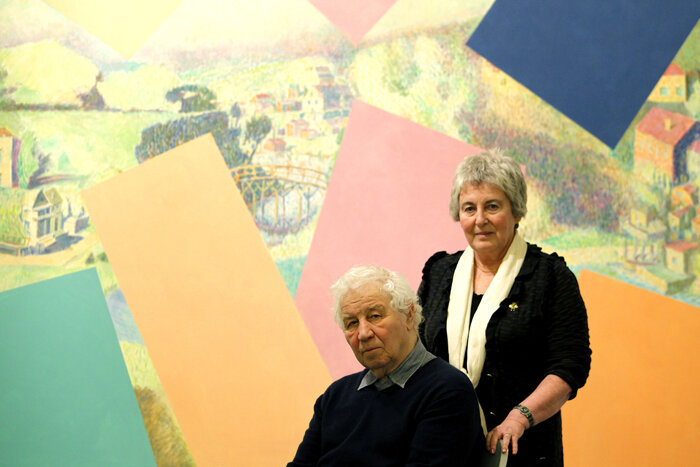
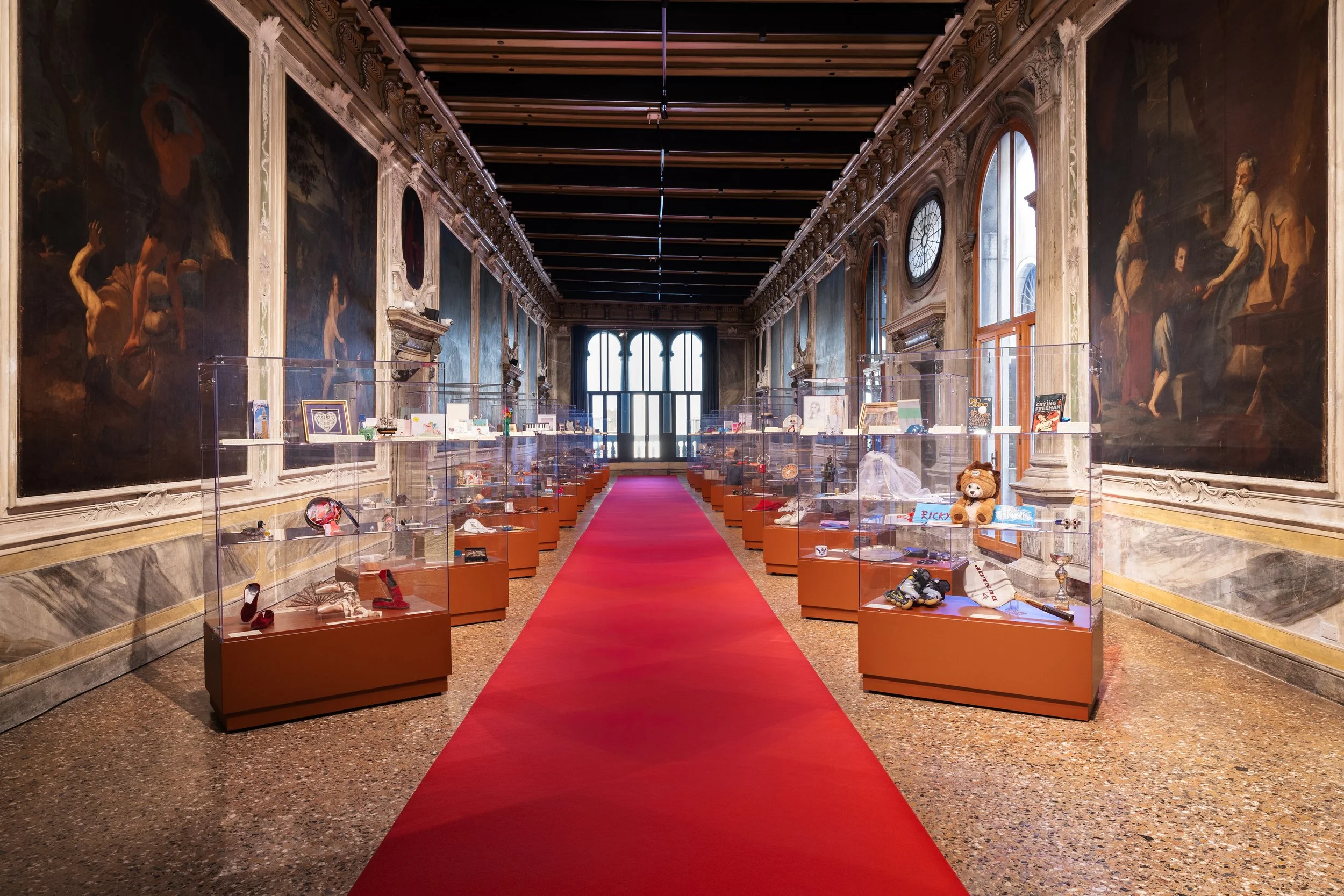
On the occasion of the 61st International Art Exhibition – La Biennale di Venezia, Emilia Kabakov brings to the lagoon an idea originally conceived together with her late husband, Ilya Kabakov: Venetian Diary, a monumental and participatory work that will represent an extraordinary self-portrait of the city.

Curated by Cesare Biasini Selvaggi and Giulia Abate, the exhibition will transform the main floor of Ca' Tron—a historic 16th-century palace overlooking the Grand Canal and home to the Iuav University of Venice—and part of the Padiglione Venezia into a vast narrative device. Not an exhibition about Venice, but an exhibition with Venice.

The protagonists will be approximately 500 residents of the metropolitan city of Venice: each will be invited to write a page in this collective diary, describing their connection to the city and submitting to the exhibition an object capable of symbolically representing it. Fragments of lives, memories, desires, nostalgia, and hopes will compose a layered and surprising human mosaic suspended between past and future.

Venice is filled with people working tirelessly to preserve not only the city itself, but also a sense of community we rarely encounter in the digital age. At a time where political, economic, and religious differences seem insurmountable, Venice is a beacon of hope for what can happen when neighbors support each other and share the responsibility of caring for their home for future generations,” says Emilia Kabakov.

View Event →
Collection as Cosmos
Jun
6
to May 2

Collection as Cosmos

Collection as Cosmos explores time and the stories art can tell. The exhibition challenges the idea of art history as one, continuous timeline. Instead of measuring time, it focuses on the constellations and connections we can create with artworks across time. Celebrating its 90th birthday in 2026, the Van Abbemuseum presents a new collection display that offers a fresh perspective on time and rethinks the way we look at our collection.

Like constellations of stars in the night sky, 250 artworks are spread across the museum’s three floors. They do not follow a fixed timeline or chronological order. By linking personal stories to larger cycles, the exhibition brings together different rhythms of time, from human histories to time on a cosmic scale. With Collection as Cosmos, the Van Abbemuseum moves away from presenting a single truth or a straight line through time. Instead, it becomes a space where multiple times and stories exist side by side. The exhibition stimulates wonder, invites new perspectives, and opens up a lively dialogue with time.

View Event →

Plan B: Part 1: Red
Nov
29
to Dec 4

Plan B: Part 1: Red

Red is the first color to enter our world. It pulses behind closed eyelids, floods the skin when we’re born, and warms the earliest stories told around fire. Long before written language, humans marked their surroundings—and themselves—with red ochre, one of the very first pigments ever used. It is the color of life—circulating, oxygenated, urgent—and the color of danger, warning, and desire. Red announces itself before meaning is even formed. This exhibition gathers works that approach red as pigment, signal, sensation, and metaphor. Here, red becomes both body and language: the flush that rises uninvited, the slow bruise turning toward violet, the heat of emotion surfacing before words can catch it. It is the mark of intimacy and the sign of rupture, the residue of touch and the stain of violence.

Red has always carried the weight of power—of flags, borders, currencies, and revolutions. It is the color we are told to stop at, but also the color that pushes us forward, demanding recognition. In these works, red becomes a threshold: the limit at which perception sharpens, when the world seems suddenly too bright, too full—when we “see red.” By tracing red across skin, material, memory, and abstraction, the artists in this exhibition reveal how a single color can be both universal and intensely personal. Red is the heartbeat of this show: a reminder that to feel, to blush, to bleed, to burn with anger or love, is to be alive.

Caroline Heinzmann

View Event →
Fundamental Lexicon. Contemporary Russian Art from the Sinara Foundation Collection
Sep
27
to Nov 30

Fundamental Lexicon. Contemporary Russian Art from the Sinara Foundation Collection

  • Multimedia Art Museum, Moscow (map)
  • Google Calendar ICS

The Multimedia Art Museum, Moscow presents the exhibition ‘Fundamental Lexicon. Contemporary Russian Art from the Sinara Foundation Collection’. This exhibition continues the museum’s long-term strategic programme ‘Private Collections at MAMM’.

The Sinara Foundation was founded in 2022. Today it manages a collection of over 2000 works representing various periods in the history of Russian art since the late 19th century. The Sinara Foundation collection also includes iconic works by classic Russian contemporary art figures – these works are displayed in the MAMM exhibition.

The exhibition title refers to Grisha Bruskin’s work ‘Fundamental Lexicon’ (1986). In 1988 it participated in the legendary Sotheby’s auction in Moscow, which proved a turning point in the artistic life of the USSR and introduced the world to contemporary Russian art, long hidden behind the Iron Curtain. Bruskin’s painting, a visual catalogue of the signs and symbols of the Soviet era, sold for a record amount and immediately acquired the status of a cult work. 

The works from the Sinara Foundation collection shown at the exhibition reflect the main, ‘fundamental’ artistic strategies and trends of contemporary Russian art.

The exhibition spans the period from the 1950s to 2020s, bringing together artists who have defined the development of contemporary Russian art. Among them are former representatives of unofficial culture who are now recognised classics of Russian and international art: Ilya Kabakov, Viktor Pivovarov, Erik Bulatov, Oleg Vasiliev, Vladimir Yankilevsky, Leonid Sokov, Mikhail Roginsky, and others.

Also featured in the exhibition are items by artists of the next generation, whose work was formed on the eve of and during Perestroika, primarily in the legendary squat on Furmanny Lane. These include three members of the famous Mukhomory group – Konstantin Zvezdochetov, Sergei and Vladimir Mironenko, as well as Sergei Volkov. Their work was largely a defining style for the Moscow art scene of the late 1980s and 1990s. 

Timur Novikov was a recognised leader of Leningrad art life from the 1980s to the 2000s. The Sinara Foundation collection includes his paintings, as well as his renowned fabric appliqués and silkscreen prints. 

The exhibition also features pictures by artists who have shaped the artistic landscape of recent decades: Pavel Pepperstein, Irina Korina, Alexandra Paperno, and others. 

From the second half of the 1950s to the 1970s, post-war Soviet abstraction, kineticism, op art, metaphysical painting, Moscow conceptualism, Sots Art and others flourished. These pictorial systems existed in parallel with the official artistic doctrine.

In the 1980s marked by political and social change, artistic life was concentrated in studios and squats due to the absence of private galleries and contemporary art museums. Artists occupied abandoned buildings slated for demolition or renovation. In 1985 a squat that had appeared on Furmanny Lane in Moscow became an important centre for contemporary art of the Perestroika era. It housed the workshops of Vladimir and Sergei Mironenko, Konstantin Zvezdochetov and many others. It was at Furmanny that photographer Sergei Volkov began painting, and by 1990 he had already participated in the 44th Venice Biennale of Contemporary Art. 

During those same years one of the main artistic forces in Leningrad was the New Artists group. Following the calls of the 1920s Futurists to throw the classics off the ship of modernity, the New Artists ideologue, artist and cultural figure Timur Novikov declared: “Whoever is not with the new is old. He is material for re-composition”. The method of re-composition he formulated was aimed at “organising new art from the old”. It is no coincidence that the words ‘perestroika’ and ‘re-composition’ frame the portrait of Novikov by Andrei Khlobystin – a remarkable artist, art historian, and curator whose work accumulated key elements of the New Artists’ visual language.

Artists defining the current state of contemporary art continue and develop previously established traditions and creative methods. Yet they also devise their own visual and conceptual languages, addressing diverse cultural contexts and codes. For example, in her series ‘Temporary Phenomena’ (2016), Irina Korina refers to images of the Soviet era, using recognisable fonts from the 1920s to 1980s and transforming her graphic objects into resemblances of Soviet calendars. Ivan Plyusch and Alexandra Paperno address the themes of time and memory in their work.  

The history of modern Russian art is still not written and insufficiently analysed. Today private collections play an important role in the systematisation and theoretical understanding of modern artistic practices. Although the collections of major Russian museums such as the Tretyakov Gallery, the Hermitage, the Russian Museum, MAMM and MMOMA contain works by leading Russian authors from the second half of the 20th to the early 21st century, the majority of works by our classic artists are held in private collections. The Sinara Foundation collection consists of works acquired both in Russia and abroad. Some of the works presented at the exhibition are being shown in Russia for the first time, allowing us to expand our knowledge of contemporary Russian art.

View Event →
Kammermusik
Jun
7
to Jul 19

Kammermusik

  • Salzburg Villa Kast (map)
  • Google Calendar ICS

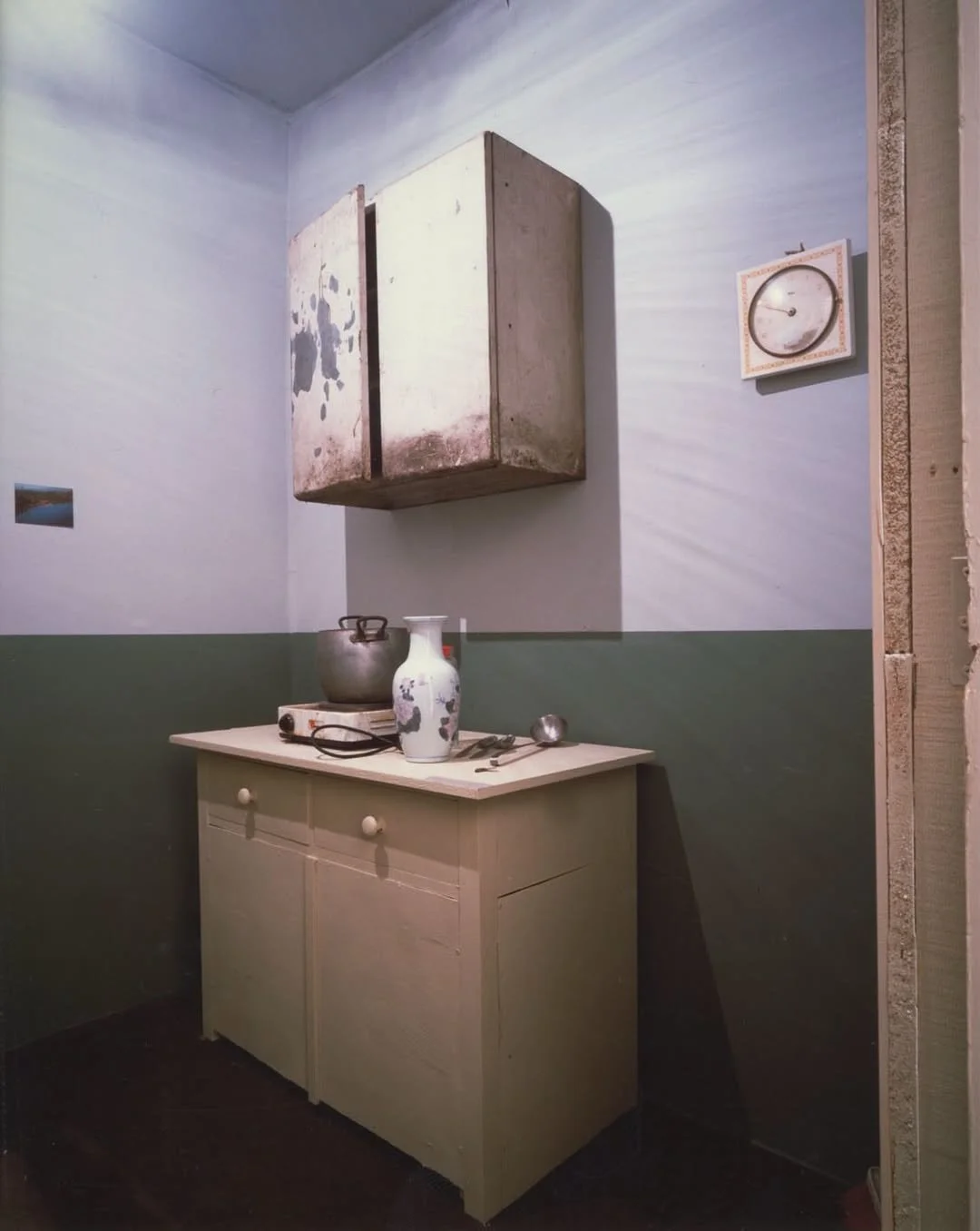
Thaddaeus Ropac Salzburg presents a selection of historic works by pioneering conceptual artists Ilya and Emilia Kabakov. The exhibition covers paintings by Ilya Kabakov, dating from 2005 to 2015, and installations from the Kabakovs’ collaborative practice, which spanned 1989 to Ilya’s passing in 2023. Every installation presented is a meticulously arranged composition of objects, artworks, texts, lighting, and sound, designed to fully envelop the viewer in the experience, echoing the idea of the ‘total installation’ that has been central to their practice. The artists’ works allow for multiple interpretations, spanning political innuendos, personal fears and desires, as well as a longing to escape the harsh, at times unbearable, realities of daily life.

Watch a video of Emilia Kabakov speaking about the exhibition here.

View Event →
In the Closet
May
14
to Jun 29

In the Closet

  • Moscow Museum of Modern Art (map)
  • Google Calendar ICS

The Moscow Museum of Modern Art is pleased to present In the Closet an exhibition that continues the series of research projects on Moscow conceptualism. Previously, the exhibitions Memories of APTART and Alienation Mechanism were held as part of the Collection. Vantage Point programme.

The new exhibition explores the theme of personal space, both physical and mental, as well as the artists' dwellings and the character of their art. The starting point of the exhibition is the image of Sitting-in-the-Closet Primakov – one of the characters in Ilya Kabakov's albums, who from childhood lived in the limited space of the wardrobe of his parents' flat, and then disappeared.

The motif of a cramped room is a defining feature of the discourse of the entire generation of Moscow conceptualists: closed spaces, wardrobes, closed window bindings, boxes and drawers are vestiges that constrain the creator. Exiting into a different space is, accordingly, a sign of parting with them. The exhibition invites the viewer into the world of characters who strive to overcome the dumbness and confinement of personal spaces, to find their own voice and the path to self-determination. The characters of Moscow conceptualism are not so much a product of the artist's imagination as independent images that live at the crossroads of several cultural and communicative dimensions.

The project brings together works by artists of different generations and trends, such as Alina Glazun, Anya Zhelud, Ilya Kabakov, Ivan Chuikov, Georgy Kiesewalter, Oleg Vasiliev and others. Thus there are paradoxical ‘rhymes’ with the main ‘album’ line, both literary and verbal line. The exhibition space resembles a total installation, where more than 50 artworks are juxtaposed with archival materials and photo-documentation of the personal spaces of the conceptualist artists.

View Event →
Through the Seasons
Apr
24
to Sep 27

Through the Seasons

  • Henie Onstad Art Center (map)
  • Google Calendar ICS

Henie Onstad Kunstsenter has long been examining private and public collections in Norway through an ongoing exhibition series. Such collections play a pivotal role in shaping the visual arts and museum landscape in Norway, making them essential to highlight and discuss. Featured artists include Anna-Eva Bergman, Ida Ekblad, Howard Hodgkin, Laura Owens, Glenn Ligon and Jakob Weidemann.

Christen Sveaas Art Foundation is a significant force in both Norwegian and international contexts. Founded in October 2019 by Christen Sveaas, the foundation was established following a donation of 800 works from his private collection, built over nearly 40 years. The collection, one of the largest in Norway, is anchored in two main pillars: Norwegian Modernism and international contemporary art.

The exhibition is curated by Lydia Yee, an independent curator and art historian, previously Chief Curator at Whitechapel Gallery, Curator at Barbican Centre in London, and Senior Curator at the Bronx Museum of the Arts in New York.

View Event →
«This Is the Best We Have». The Art Newspaper Russia Selection
Feb
18
to May 18

«This Is the Best We Have». The Art Newspaper Russia Selection

  • Moscow Museum of Modern Art (map)
  • Google Calendar ICS

The Moscow Museum of Modern Art, together with The Art Newspaper Russia, presents the project This Is the Best We Have. The Art Newspaper Russia Selection. The exhibition features artists from different generations and showcases a wide range of imaginative approaches, a variety of styles and perspectives represented on the Russian art scene.

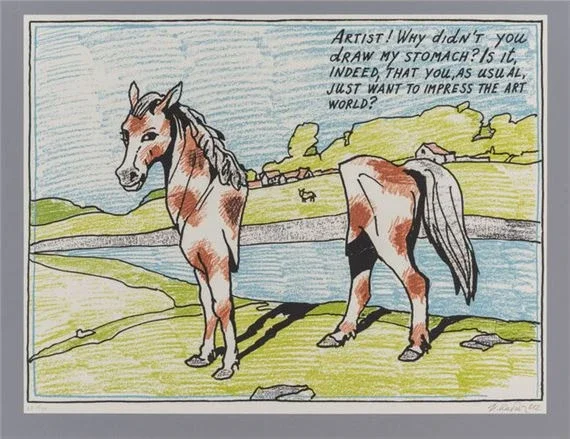
The show will include selected works from the 1960s until the present day, which were discussed in interviews published by The Art Newspaper Russia in the book 25 Interviews with Contemporary Artists. 2014-2024, as well as works presented at exhibitions the interviews refer to. The project is a retrospective of contemporary Russian art over more than half a century, which will evidence how previous generations influenced emerging artists: from Ilya Kabakov and Eric Bulatov to Recycle Group and Alina Glazun.

Works that are extremely diverse in technique and visual style have one thing in common: all artists use text. Each audience member will be able to read their own messages into these texts that refer to history, modernity and visions of the future. The exhibition will include fragments of interviews that help to understand the meaning of the artistic visual statements.

The phrase ‘This is the best we have’ in the project's title is a quote from Valery Chtak, a recently departed bright representative of the 2000s generation, whose works will be part of the exhibition. MMOMA and the TANR editors want to emphasize yet again that the best we have are artists and their works.

View Event →
Cumulus
Jul
26
to Aug 14

Cumulus

  • Valletta Contemporary (map)
  • Google Calendar ICS

History has preserved the collections of several prominent collectors, their discerning eye, measured taste and connoisseurship assembles the finest pieces under a single roof. This collection, draws together the work of 29 radically different artists from across the globe, including Gilbert and George, Ai Weiwei and Tracey Emin among several others. The thread which connects the artists’ work is the collector, namely Norbert Francis Attard.

The work presented in this exhibition, is a reflection of the collector’s attuned eye. Not connected thematically and eclectic by its very nature, it represents a collection which has grown organically, slowly over decades. The exhibition illustrates his ever-evolving tastes, his varying interests thus capturing moments in time.

The exhibition’s title is firmly grounded in the definition of the word Cumulus. The word has two varying meanings, one referring to an "accumulation" or "a collection of several things grouped together as a whole." Its second meaning, though loosely connected, touches on a specific type of cloud formation. Derived from the Latin word "cumulus," meaning "heap" or "pile," cumulus clouds are detached, individual, cauliflower-shaped clouds typically seen in fair weather conditions. When illuminated by the sun, the tops of these clouds are brilliant white tufts, though their bases are often relatively dark. The two definitions capture the very essence behind this collective exhibition.

View Event →
The Unknown Kabakov: Art as a Way to Survive
Jul
13
to Nov 10

The Unknown Kabakov: Art as a Way to Survive

  • Echigo-Tsumari Art Field (map)
  • Google Calendar ICS

Tracing the artist’s philosophy through 70 years of drawing, this exhibition traces the creative journey of Ilya Kabakov, who passed away in 2023. Born in the former Soviet Union (now Ukraine), Kabakov’s artistic legacy is explored in this showcase. While he left behind numerous works at the ETAT, this exhibition primarily focuses on his drawings, including his graduation project from the 1950s, presented to the world for the first time. Additionally, the exhibition features Kabakov’s later works, which incorporate new depictions into his previous monochrome pieces.

View Event →
Two Times
May
22
7:00 PM19:00

Two Times

The Centre Pompidou presents a new installation by Ilya and Emilia Kabakov, as well as a selection of the Kabakov works from their collection. The presentation will be accompanied by a symposium dedicated to Ilya, featuring Emilia Kabakov, Bernard Blistène, Jean-Hubert Martin, Robert Storr, and Vadim Zakharov.

View Event →
Fragments of a Reality that Once Was
Mar
14
to Mar 23

Fragments of a Reality that Once Was

  • Ludwig Forum Aachen (map)
  • Google Calendar ICS

The Ludwig Forum for International Art is home to around 1,800 paintings, sculptures, and works of the graphic arts from the former Soviet Union and central, eastern, and southeastern Europe which Irene and Peter Ludwig collected between 1979 and 1996. Fragments of a reality that once was marks the launch of a re-examination, re-positioning, and new exploration of sections of this collection which in the past were inventoried under the category “Art from the USSR” and about which there is little information down to the present day. Moreover, the respective works and artistic positions will be re-contextualized in relationship to current art and cultural discourses, an approach facilitating a critical inquiry into the prevailing Western perspective on “Eastern European art.” This first exhibition of the research project of the same name considers a series of art works which are connected in various ways with Ukraine. The exhibition undertakes a revision, examining the vague and imprecise categorizations, terminologies, and contextualizing narratives–whether they be geographical, political, or art historical–with the aim to do justice to the diversity and complexity of a region most recently racked by tension and violence.

That this requires changing established viewing habits is evident in the very first room of the exhibition, where works from the 1970s and 1980s are presented which, at first glance, seem to belong to the Classical Modernism of the 19th and early 20th centuries. They were created in response to the doctrine of Socialist Realism, which prescribed that art was to serve the sole purpose of justifying progress towards a communist society. Against this background, the seemingly anachronistic paintings of countryside idylls like Family in Donbas (1970) by Arkadiy Petrov and Gurzuf (1972) by Yuriy Lutskevych unfold their emancipatory potential. The withdrawal into the private sphere and to remote places, beyond the grasp of the central government, was characteristic of the subversive undermining of this normative doctrine. In a conscious turn away from the official aim of unifying all artistic production under the sign of communism, the retreat into a private domain and the drawing of inspiration from national patriotic motifs within the individual Soviet republics were typical forms of an–albeit defensive–artistic resistance.

The exhibition also explores the legacy of the “Russian avantgarde.” Paintings by Oleksandr Tyshler from the 1960s and 1970s reveal the universal character of the avantgarde and the subsequent metaphysical-figurative painting of the early 20th century, demonstrating how the aesthetic and revolutionary programs became a pivotal reference point for many later artists in the Soviet era. In turn, the large-format works of Leonid Voytsekhov Angling Season (1989) and End of the Performance (1987) are key examples of a pictorial language, widespread in Ukrainian contemporary art at the end of the 1980s, that engages, at times ironically, with an already disintegrating Soviet Union.

View Event →
The Trial. Franz Kafka and 20th-Century Art
Oct
11
to Jan 14

The Trial. Franz Kafka and 20th-Century Art

  • Jewish Museum and Tolerance Center (map)
  • Google Calendar ICS

Franz Kafka predicted the 20th century. Even though all of Kafka’s novels, including The Trial that was written in the first years of World War I, were left unfinished, he still managed to portray – in an agonizingly accurate way – all the hardships that the 20th century would witness, from loneliness to absurdity to people’s inability to oppose the impersonal space.

Writing about the fears and tragedies of his characters, Kafka foresaw the rise of totalitarian regimes in Europe in the 1930s, the advance of fascist ideology, World War II, and humankind’s attempts to deal with the consequences of these catastrophes, which brought about a philosophy of alienation and pain. The visionary nature of Kafka's works and the paradoxical depth of their discreet poetic style make him one of the most important authors of the 20th century. Though his books were rarely published during his lifetime, they have since been translated into almost all major languages and his legacy has been an important cultural influence inspiring visual artists for many decades.

The exhibition The Trial. Franz Kafka and 20th-Century Art seeks to reveal the parallels between the author’s works and the major art movements of the last century. The exhibition is designed in such a way that visitors can choose between the two routes leading to its center, which alludes to Kafka’s novel The Castle.

The first of the two routes is a road down one of Kafka’s most celebrated novellas, The Metamorphosis. The transformation of the protagonist’s world is illustrated by the works of German expressionist artists such as George Grosz and Max Pechstein, Egon Schiele, and others.

The second route leads to a room echoing the interior of an office that looks like the one where both Kafka himself and Josef K., the protagonist of The Trial, worked. This section of the exhibition features works by conceptual artists, including Joseph Kosuth, Ilya Kabakov, Viktor Pivovarov, Dmitry Prigov, and more.

View Event →
Units of Time From Sergey Alexandrov’s Collection
Aug
23
to Oct 22

Units of Time From Sergey Alexandrov’s Collection

  • Moscow Museum of Contemporary Art (map)
  • Google Calendar ICS

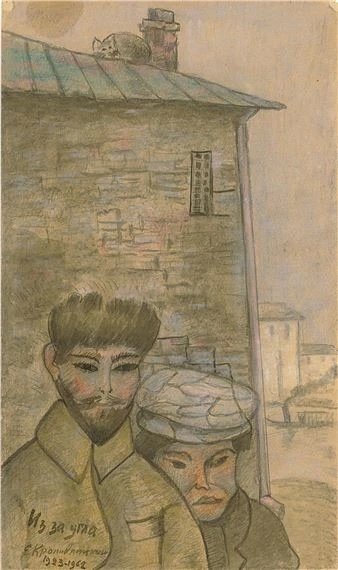
The Moscow Museum of Modern Art presents Units of Time, an exhibition featuring art from Sergey Alexandrov’s collection. The show will include works by 12 key representatives of the 1960s Soviet unofficial art scene, as well as their predecessors and followers, including Ilya Kabakov, Dmitry Krasnopevtsev, Vyacheslav Koleychuk, Anatoly Zverev, Evgeny Kropivnitsky, Vladimir Yakovlev, Boris Sveshnikov, Dmitry Plavinsky, Vladimir Nemukhin, Vasily Sitnikov, Lidia Masterkova, among others. The project continues the MMOMA exhibition programme which seeks to popularize and showcase new facets of private Russian collections.

Each exhibition hall is monographic and focuses on one artist while also providing the context of their contemporaries as well as later and earlier generations. Although the focus of the exhibition is the 1960s art, it reveals the complex dialogues between different eras and their representatives. These obvious connections, art’s continuous progression, intersections and continuity expose the phenomenon of time itself. In the project, time acts as a form, both static and mobile, directed into the past and the future, bringing new textures into art or dissipating in fantasy stylizations. The audience will see twelve independent, autonomous artists who represent and synchronize various milestones of the art of the second half of the XX — the beginning of the XXI centuries, with the exhibition as a whole addressing the issue of time, so relevant for the contemporary culture.

Besides works of fine art, the show will feature a documentary film about the artist Vladimir Yakovlev (directed by Nikolai Kotrelev, Vladimir Osherov, music by Alexey Aigi). The project will also include a photo gallery with 35 unique portraits and life scenes of nonconformist artists shot by famous photographers: Igor Palmin, Alexander Zabrin, Valentin Serov, as well as photographs from family archives. The score by Anton Silaev, specially composed for the project, will complement the exhibition narrative.

View Event →
In memoriam Ilya Kabakov: Prints in the Hermitage collection
Jun
15
to Oct 29

In memoriam Ilya Kabakov: Prints in the Hermitage collection

  • State Hermitage Museum (map)
  • Google Calendar ICS

On 15 June 2023, the exhibition “In memoriam Ilya Kabakov. Prints in the Hermitage collection” opens in the General Staff building of the State Hermitage. It will present original silk-screen prints documenting projects from different years.

Ilya Kabakov was a leading representative of Moscow Conceptualism, a member of the late generation of Soviet artists who himself achieved worldwide recognition. Kabakov is widely known for being the creator of a new genre in the history of art – the total installation. In it, the artwork is not some individual object, but an integral space that absorbs the viewer into itself.

In their works, the creative partnership of Ilya Kabakov and his wife Emilia mythologize the routine, everyday, communal life of the USSR. The protagonists of their works are vulnerable romantics and forgotten artist-dreamers who dwell in the prosaic reality of the Soviet daily round.

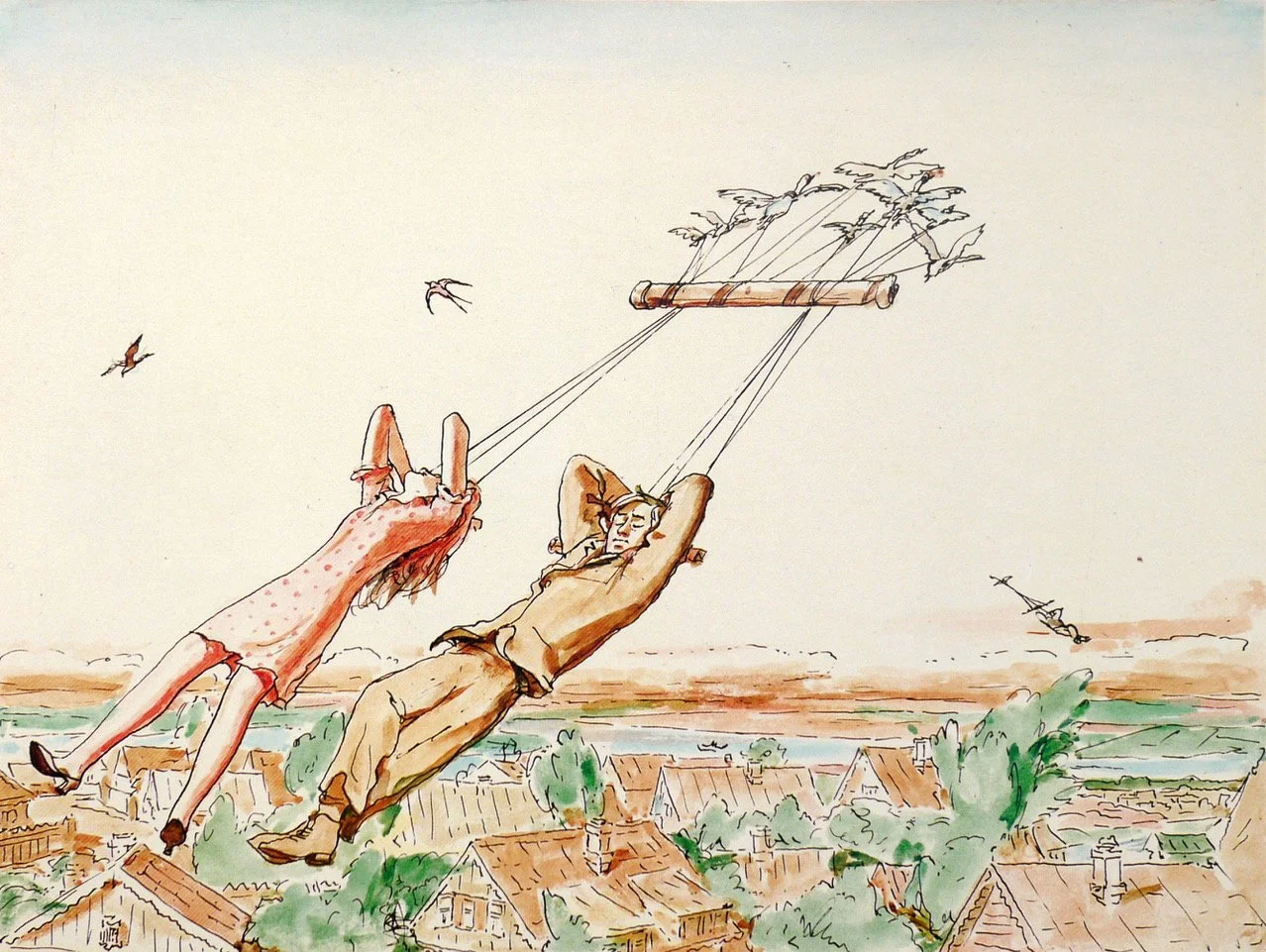
One of the key motifs in the Kabakovs’ oeuvre is flight. For the artist, it is bound up with the theme of fleeing and rescue – either from the wrath of those in power or from harsh reality in general. An important role in the development of this theme is played by the image of the angel – a being that is not bound by state frontiers and free of earthly bureaucratic restrictions. In Encounter with an Angel, Ilya Kabakov reflects on the possibility of such a meeting in each person’s life. The concept presented in the sketch that can be viewed in the exhibition was implemented several times in the form of large-scale installations.

View Event →
The comprehensive display of Ilya Kabakov’s works
Jun
6
to Oct 1

The comprehensive display of Ilya Kabakov’s works

  • New Tretyakov Gallery (map)
  • Google Calendar ICS

Kabakov’s works are devoted to universal feelings well understood by everyone – fear, hope and dream.

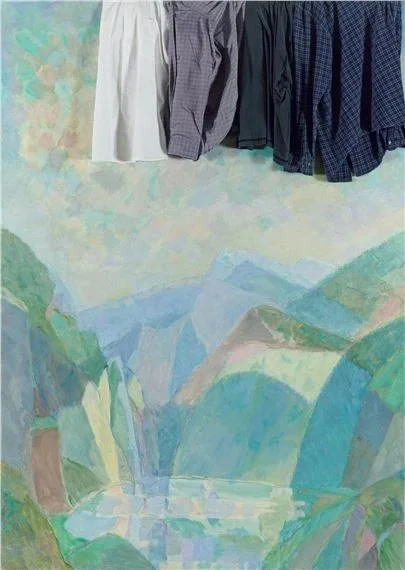
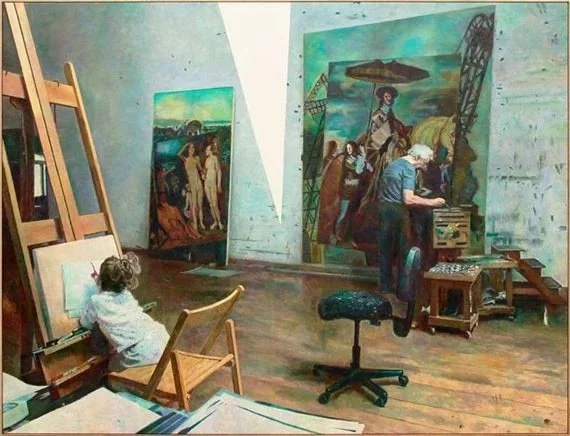
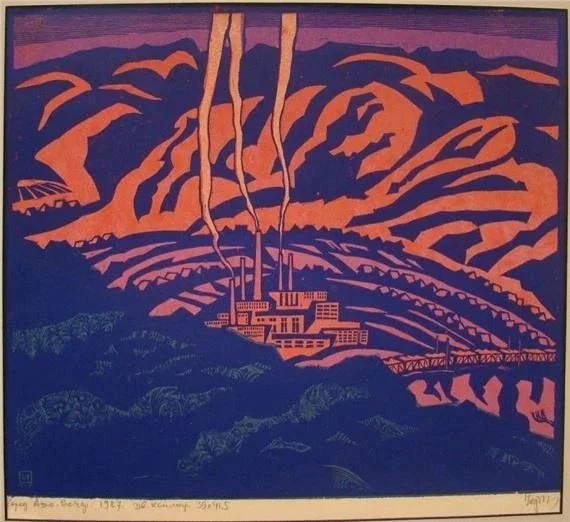
The small hall of Ilya Kabakov in the New Tretyakov Gallery presents one of the albums from the series ‘Ten Personages’ – Flying Komarov, picture-stand All about Him (Replies of the experimental group), authorly versions of two early pieces Berdyansk Spit and Man and Small House as well as picture-installation Mountain Lake converging painting with real clothes. Kabakov’s ‘little man’ is in the focus of all these pieces: he entrenched himself in the history of not only Russian but global art.   

View Event →
At the Studio
May
26
to Jun 11

At the Studio

  • Collezione Giancarlo e Danna Olgiati (map)
  • Google Calendar ICS

Starting from the title of Ilya Kabakov’s work - an autobiographical account of the artist’s vision of the great avant-garde movements of the past and specifically his love for the painting of the 1600s - in spring 2023 the Giancarlo and Danna Olgiati collection will be presenting its customary exhibition devoted to works, many recently acquired, that forge a constant dialogue between the present and the past, where the concept of the artist’s studio is explored through various forms and media.

View Event →
Dialogue In Time And Space: Russian Art Of XX-XXI Centuries
Feb
1
to May 1

Dialogue In Time And Space: Russian Art Of XX-XXI Centuries

  • Moscow Museum of Modern Art (map)
  • Google Calendar ICS

The Moscow Museum of Modern Art together with the Sinara Foundation for the Support and Implementation of Cultural Initiatives are presenting Dialogue in Time and Space, an exhibition that will acquaint the viewer with the works of Russian artists of the 20th and 21st centuries. The exhibition will feature over 120 paintings, graphics, sculptures, and objects created between 1970 and 2000, demonstrating the richness and diversity of the creative palette of the leading artists of the Urals and Russia as a whole.

Dialogue in Time and Space is a project that brings together two large groups of works. Some of them were created in different cities and even countries, and others come from the Urals region. The exhibition is located within the Museum’s mansion on Petrovka, drawing onto its architecture as well as unique and historical topography.

The exhibition is divided into several sections, based on the issues most vital and fundamental for contemporary art, including ecology, urbanization, modern history and cultural self-identification. A separate space is dedicated to the subject of industrialization, central to the Urals. The exhibition, among others, presents the names of artists belonging to the Sverdlovsk underground, characterized by bold experiments with form, rethinking of the abstract school and practical constructivism. This serious research experience contrasts in interesting ways with the postmodernism of the 2000s and its ironic narrative. The most recognizable, charismatic artists are displayed in an idiosyncratic ‘hall of giants.’

View Event →
Ilya and Emilia Kabakov: Paintings about Paintings
Sep
25
to Feb 13

Ilya and Emilia Kabakov: Paintings about Paintings

  • Dallas Contemporary (map)
  • Google Calendar ICS

Ilya & Emilia Kabakov’s exhibition Paintings about Paintings will resemble an outdated and rundown museum, incorporating never-before-seen paintings, interactive works, and installation. This will mark their first exhibition in Texas in over 20 years. 

Paintings about Paintings will focus on Ilya & Emilia Kabakovs’ most recent body of work, comprised of  twenty large-scale paintings created over the past seven years (some of which never-before-seen), sculptures, public projects, interactive works, and installation. The exhibition will present a series that addresses issues and stimuluses of theatre, architecture, and music, demonstrating the breadth of the artists’ practice. 

Based in Long Island, NY, and working together as a husband-wife team for the past three decades, Ilya & Emilia Kabakov have defined and pushed Eastern European conceptualism to epic levels. Their large-scale installations and paintings seamlessly merge both reality and myth to create hyper-theatrical environments. By integrating the visual culture of the former Soviet Union from the 1950s to '70s into the traditional lexicon of art history, their work addresses universal ideas of utopia, fantasy, and hope, as well as fear and oppression.

Their presentation at Dallas Contemporary marks the duo’s first exhibition in Texas since the Chinati Foundation installed School No. 6 in 1993. The exhibition is curated by Dallas Contemporary Executive Director Peter Doroshenko and will be accompanied by an exhibition catalogue designed by the artists.

Ilya & Emilia Kabakov: Paintings about Paintings is made possible with lead support from the Timashev Family Foundation and the generous support of Galleria Lia Rumma (Milan - Naples), Thaddaeus Ropac (London - Paris - Salzburg - Seoul), PACE Gallery, and Jamie and Robert Soros.

View Event →
In the Making: Ilya & Emilia Kabakov. From Drawing to Installation
Oct
17
to Feb 23

In the Making: Ilya & Emilia Kabakov. From Drawing to Installation

  • Tchoban Foundation Museum for Architectual Drawing (map)
  • Google Calendar ICS

The nexus between architecture and installation art has long been a topic worthy of exploration. Installation transforms space and interacts with the audience; it must be designed, constructed and installed and therefore relies on architectural components.

Since the late eighties the acclaimed conceptual artists Ilya and Emilia Kabakov have created fantastical spaces that they call ‘total’ installations inviting viewers to immerse themselves in stories about utopian dreams. The use of common objects – things which help to create an atmosphere of memory – is a key instrument in their work; they incorporate such objects in their walkable room installations, which become something like a personal museum for the “little man”.

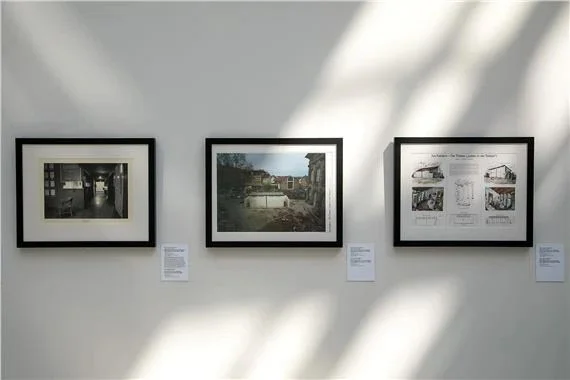
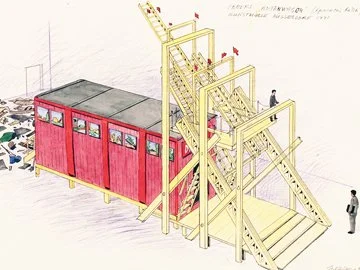
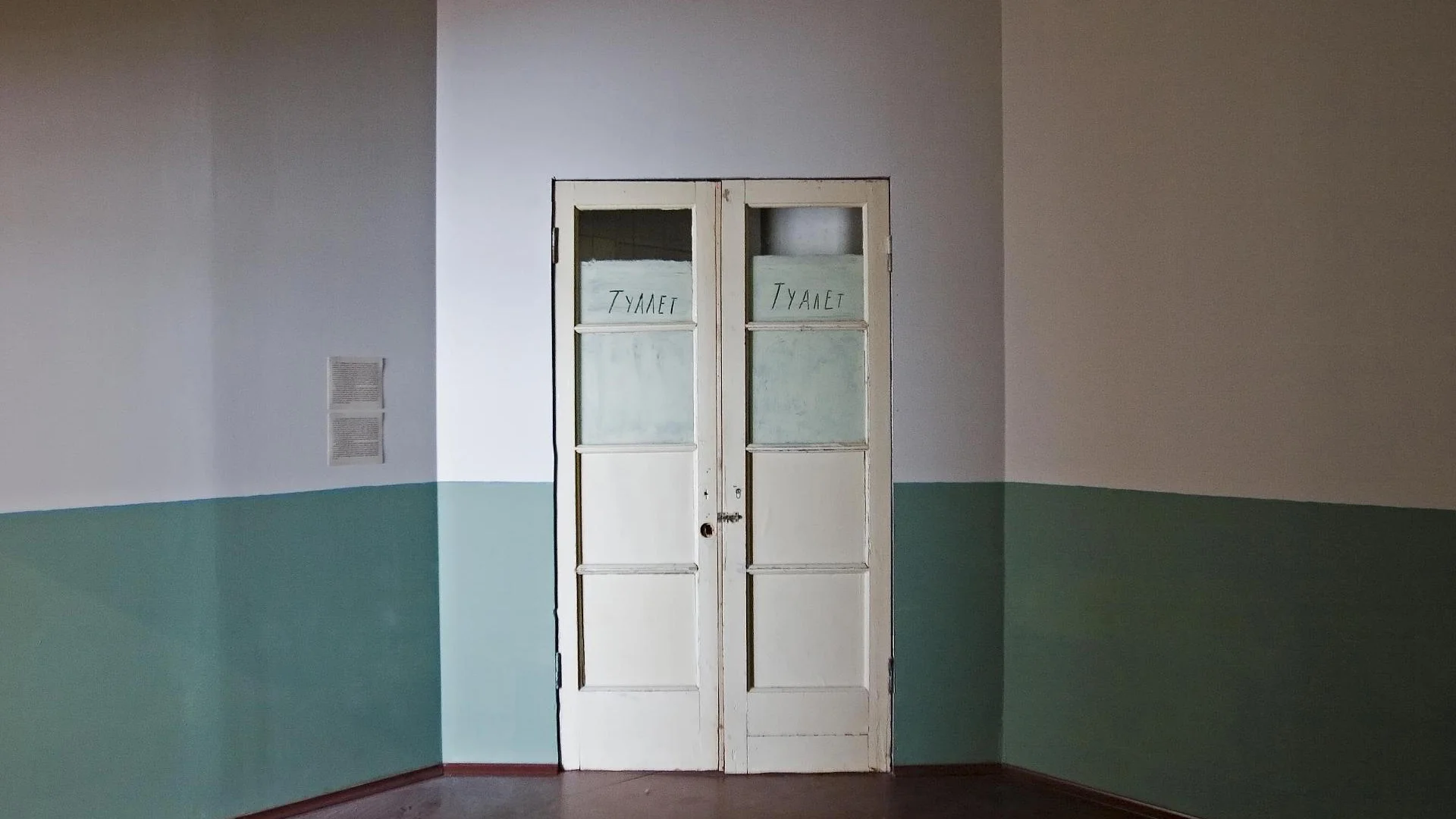
The show brings together a selection of sketches and drawings for their famous installations The Toilet realised at the IX Kassel Documenta 1992, The Palace of Projects permanently installed at the Zeche Zollverein, and The Red Pavilion, which was exhibited at the 45th Venice Biennale in 1993. Along with drawings for built works, theatre and ideas for unrealised installations such as The Vertical Opera to be performed in the Guggenheim Museum are presented. Most of the drawings on display do not reflect a thinking process that leads to their large-format installations, but rather ideas that exist from the very beginning in the minds of the artists and then are realised on paper by Ilya Kabakov.

A catalogue accompanies the exhibition.

Along with the exhibition, a light installation will be projected on the museum’s façade featuring the drawing How to Meet an Angel.

View Event →
Concert for a Fly
Sep
20
11:30 AM11:30

Concert for a Fly

The Kabakovs present a new iteration of Concert for a Fly, a string orchestra performance and sculpture work centered around the conductor: a fly hanging from the ceiling. This performance will enact a piece by composer Dmitri Shostakovich (1906–1975), entitled Quartet No. 3 in F major, Op. 73.

There will be two performances - 11:30 am and 1:00 pm.

https://www.expochicago.com/programs/dialogues

View Event →
Victory over the Sun: Russian Avant-Garde and BeyondAvatars. The artist and his double
Dec
18
to Apr 19

Victory over the Sun: Russian Avant-Garde and BeyondAvatars. The artist and his double

The Russian Avant-Garde and Beyond, the first comprehensive exhibition on the subject in Israel, will explore avant-garde trends in Russian art during the 20th century. This exhibition emphasis is on the emergence of the art movements during the historical and political upheavals in the country.

View Event →
Avatars. The artist and his double
Mar
8
to May 19

Avatars. The artist and his double

  • Musée d’Art Moderne et Contemporain (map)
  • Google Calendar ICS

This exhibition, conceived from the collection of artists’ books from the Médiathèque, has a double ambition: to insist on the essential place of the Médiathèque has a double ambition: to insist on the essential place of the document in the contemporary art and the book of the artist.

View Event →
Ilya & Emilia Kabakov: Musique de Chambre
Dec
2
to Feb 24

Ilya & Emilia Kabakov: Musique de Chambre

Thaddaeus Ropac, Paris, France

On view December 2, 2017, through February 24, 2018

Opening: 2 December 2017, 5-7 pm

Galerie Thaddaeus Ropac is pleased to present Chamber Music, an exhibition of installations by pioneering conceptual artists Ilya and Emilia Kabakov. Russian-born and American-based, today they are recognized as among the most significant international artists to have emerged in the late 20th century.

Concert for a Fly (Chamber Music) is a historic installation, first exhibited in 1986 in Switzerland at the Neue Galerie, Dierikon, then in 1992 at the Cleveland Center for Contemporary Art and at the Kölnisher Kunstverein, Cologne. It forms part of an overall series of ten installations, where each represents a character.

Exhibited today in the Marais Gallery, the work is given renewed relevance. Emilia Kabakov states that this installation: ‘is about a person who cannot escape fears, problems, the oppression of everyday life. We do hope that today, in Paris, despite all the fears and innuendos of politics, this work, being so poetic, will be accepted once again and enjoyed.’

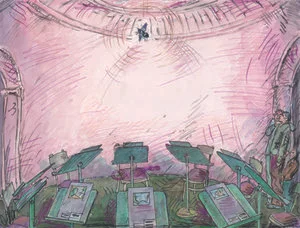
In the center of the installation, a paper fly hangs from the ceiling. Twelve empty chairs and music stands are arranged in a circle around it. Each stand holds a white sheet with colorful drawings and Russian texts, translated into English. Some also include musical scores. Everything seems to point towards the immobile fly, which acts as a focal point, directing our gaze upwards and orchestrating our movements. A continuous sound of classical music surfaces from an undefined source. It contains abstract notes, conjuring the viewer into a state of anticipation, as if waiting for a concert to begin.

A fascination with the parasitic nature of the fly and its corresponding anthropomorphic qualities has long gripped the artists; the fly is a recurring character and concept throughout their oeuvre. For them, the concept of the fly is as volatile as the fly itself. Concert for a Fly (Chamber Music) is an example of a ‘total installation’, a term coined by Ilya Kabakov. Art historian Oskar Bätschmann, in the artists’ catalog raisonné, describes these as encyclopedic constructions that can be entered, inviting and tempting the spectator to become an active participant. Even if the space is completely occupied by the installation, the viewer is left with a sense of illusion and lingering feeling of void. This hovering state is a recurring theme throughout their work.

Hence a second installation leads us into another room for Concert For A Fly (1993), accompanied by a musical arrangement by Joseph Morag. The room contains a used toilet with a single, vintage lightbulb. Crumbling walls and old paintwork surround a window that looks onto a void. A multitude of flies swarms around the window, congregating around the score for ‘A Fly Symphony’, resting on the lone music stand and contributing to the general sensation of melancholic neglect.

The Fallen Chandelier (1997), situation between these two installations, takes us by surprise. The chandelier has clearly snapped from the electrical wire and has crashed to the floor, a sound of clinking crystals fills the space. It speaks of the transitory nature of functionality, the absence or disappearance of practical objects and their re-materialization as ghost-like presences. ‘What happened here?’: an unexpected catastrophe, clearly something out of the ordinary, that uses the sudden inertia of the captivated visitor to jolt out of the everyday and into a state of thought and intrigue.

Over the last years, Paris has been of critical importance for the Kabakovs as the Strange City during Monumenta at the Grand Palais in 2014. While their work is deeply rooted in the Soviet social and cultural context in which the Kabakovs came of age, their work has achieved universal importance. Their large-scale projects include the Russian Pavilion of the 45th Venice Biennale in 1993, Documenta IX Kassel, Germany 1992, and the Grand Palais’ Monumenta 2014 The Strange City that traveled to Shanghai to the Powerstation in 2015.

In addition, to the historic installation, currently, their major paintings exhibition is on view until 6 January 2018.

The artists current museum exhibitions are at the Hirshhorn Museum Ilya and Emilia Kabakov: Utopian Projects (7 September 2017 – 4 March 2018) and at Tate Modern, their first major museum exhibition in the UK, Ilya and Emilia Kabakov: Not everyone will be taken into the future (18 October 2017 – 28 January 2018), travelling to The State Hermitage Museum, St Petersburg and the Tretyakov Gallery, Moscow, in 2018.
View Event →
Ilya & Emilia Kabakov: New Paintings
Oct
19
to Jan 6

Ilya & Emilia Kabakov: New Paintings

Thaddaeus Ropac, Paris, France

On view October 19, 2017 through January 6, 2018

Opening: Thursday 19 October 2017, 6pm-10pm

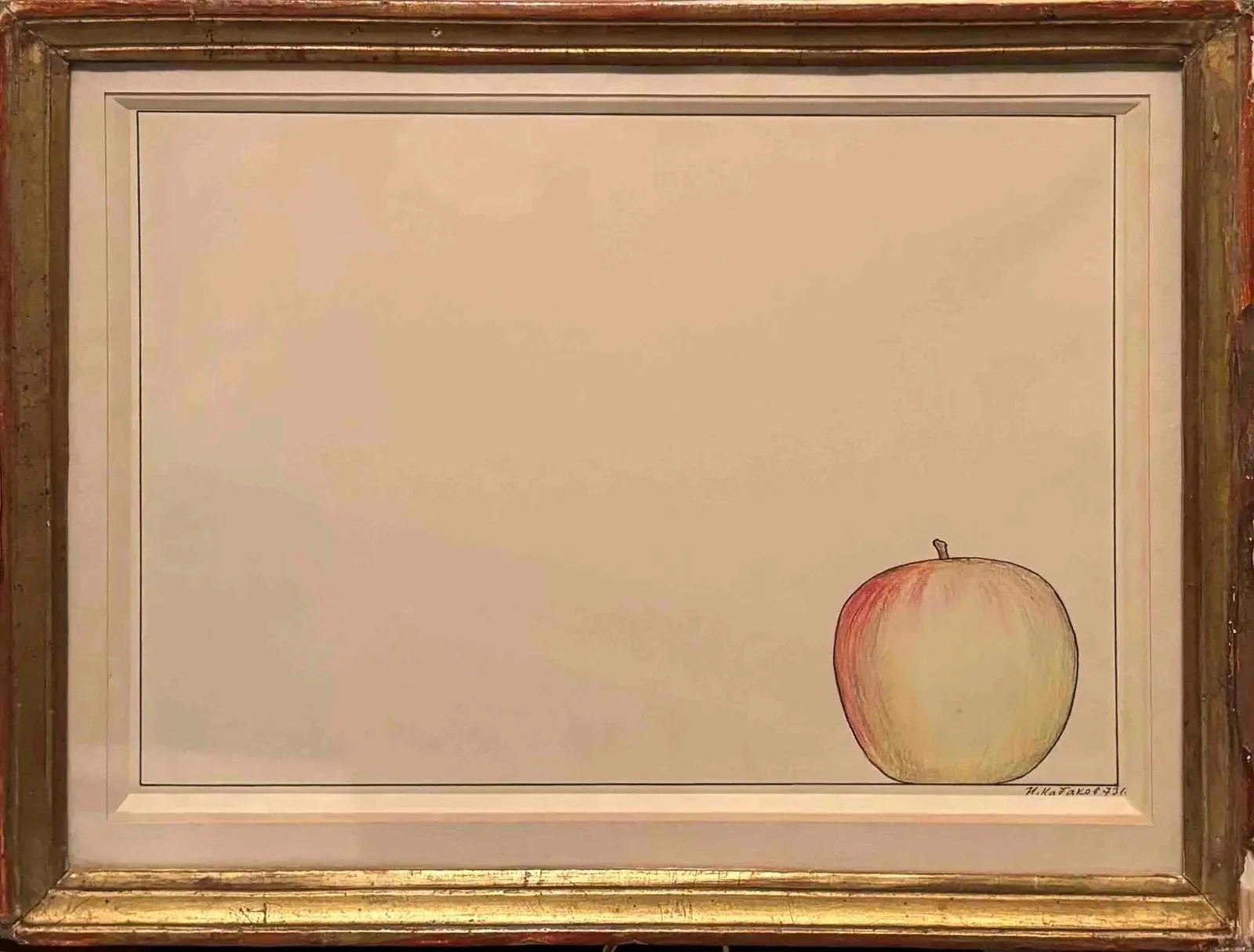
Galerie Thaddaeus Ropac is pleased to present an exhibition of new paintings by pioneer conceptual artist Ilya Kabakov. Never shown before, the works dating from 2014-2016 are presented for the first time in Paris. Russian-born and American-based, today Ilya & Emilia Kabakov are recognized as among the most significant international artists to have emerged in the late twentieth century. Considered by curator Robert Storr as ‘one    of the great story-tellers of our era’, Ilya Kabakov is known to have fundamentally rethought the nature of ‘conceptual’, ‘environmental’ and ‘performative’ art but also of painting through complex narrative forms. One of the characteristic ways he explores the conceptual potential of narration is through his practice of ‘painted collage’.

The exhibition presents three series that reflect the artist’s complex relationship with the past and the notions of personal and collective memory. Ilya Kabakov adopts a new painter’s persona for each series in which different realities overlap.

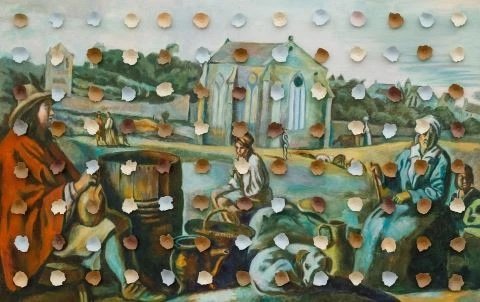
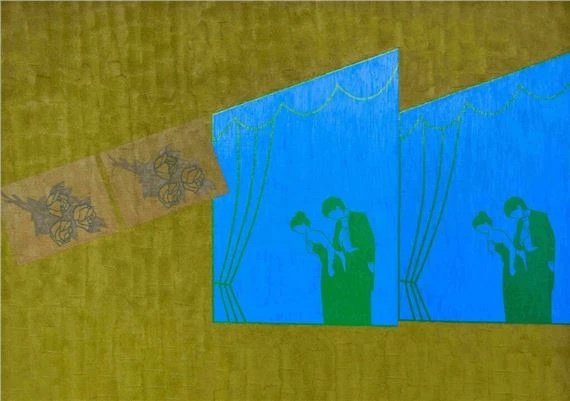
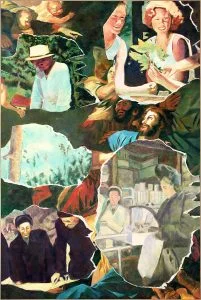
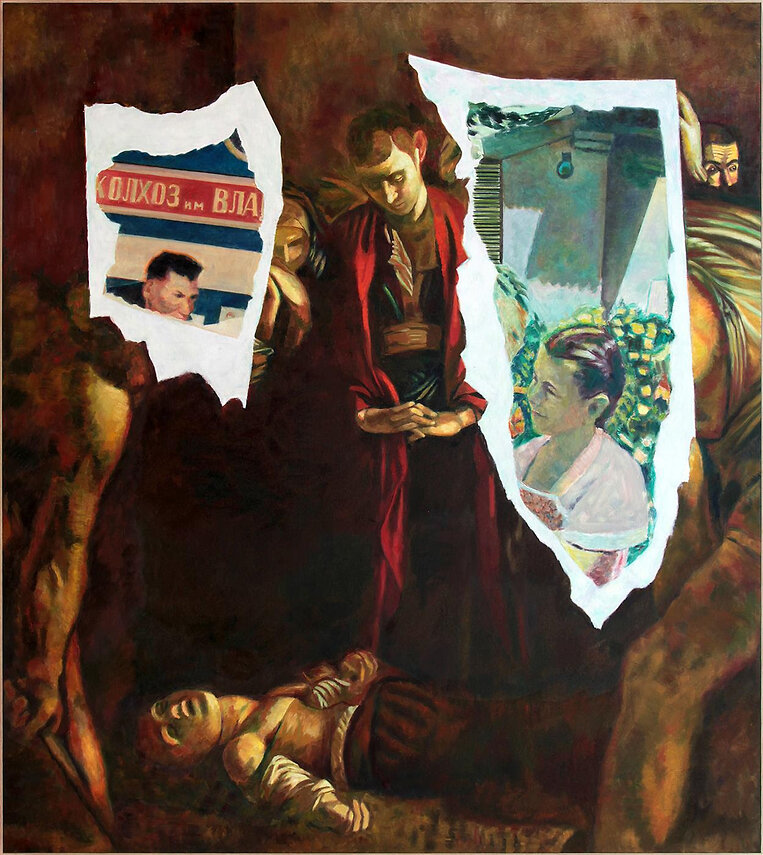
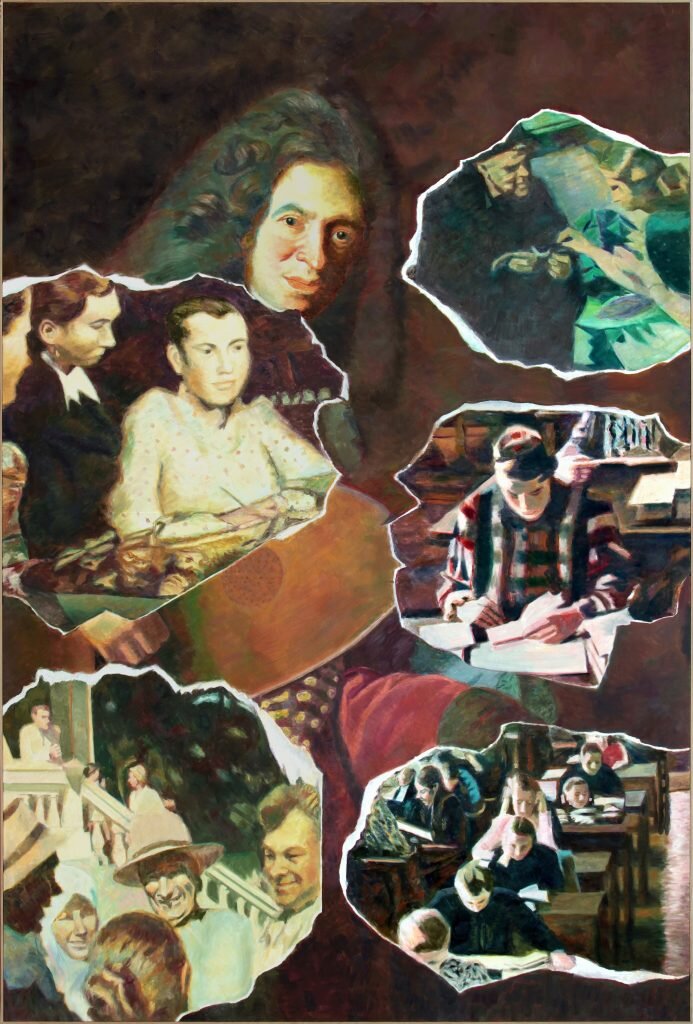
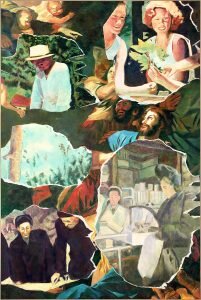
In the series Two Times (2014-2016) Ilya Kabakov merges visual fragments of soviet imagery with those of seventeenth century Baroque paintings such as Caravaggio’s, The Burial of Saint Lucy (1608) and François de Troy, Portrait de Charles Mouton (1690) in the Louvre. Ilya Kabakov confronts two very different forms of painting, time frames and realities in a single canvas. Since the collapse of the Soviet bloc, the images of happiness, progress and harmony conveyed by stereotyped propaganda have gained a form of folklore quality that is deceptive of its nostalgia. Painted in shapes with torn edges, these images seem to erupt from historical paintings like thoughts that resurface. Ilya Kabakov’s carefully thought-out compositions directly mirror the complexity of our mental space, which intertwines personal and collective memories.

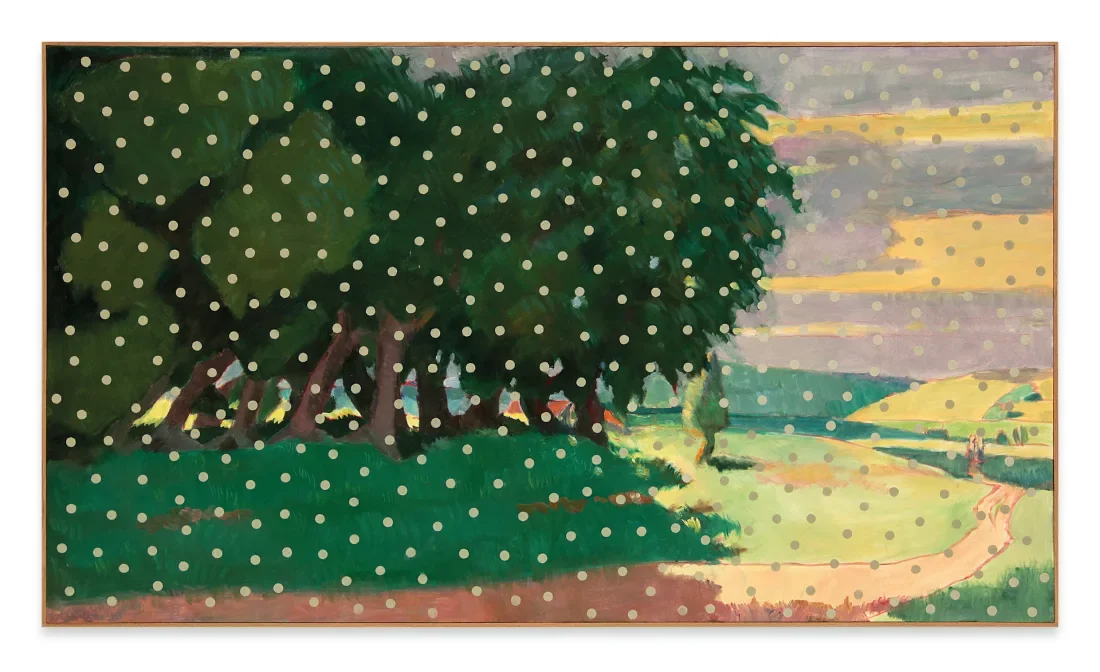
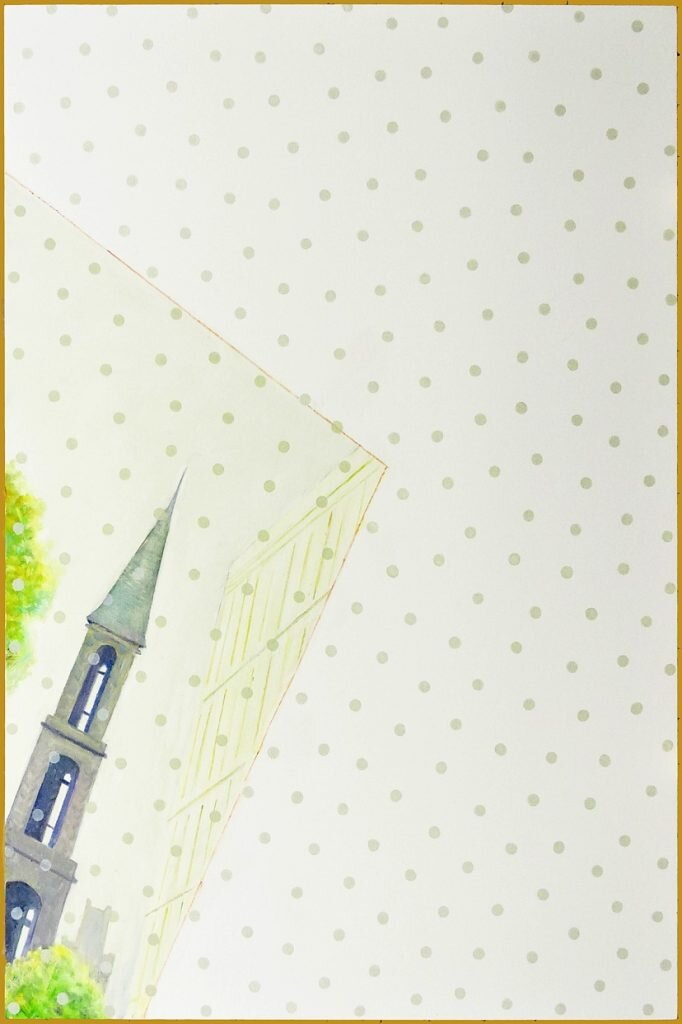
The painting In the Right Direction, Nr 4 (2014) features four different cut-out scenes arranged in sequence: the first shows a ship departing, followed by a 1950s ski resort, then a grand 1930s interior and finally a sunlit nurse. Although the scenes appear as moments of happiness and leisure, the underlying deception of the utopic ideal resonates. The impressionist style of the background reveals the traits of one of the specific personas constructed by Ilya Kabakov. The Flying Painting During the Temporary Loss of Eyesight (2015) series combines abstract motifs of white planes and dots with urban subjects. Here, the artist adopts a character of a painter that longs to create a better reality.  The dots refer to earlier works where he added actual candy wrap to signify sweetness, by   unifying the surface of the canvas they also show a clear dialogue with conceptual painting. Paris has been of critical importance for Ilya & Emilia Kabakov, as their work achieved universal recognition during Monumenta 2014 with The Strange City at the Grand Palais, Paris and the Dream City at the Power Station in Shanghai in 2015. Other large-scale projects include the Russian  Pavilion of the 45th  Venice Biennale in 1993,  Documenta IX, Kassel, Germany in 1992.

This year Ilya & Emilia Kabakov are celebrated worldwide with the major exhibition at Tate Modern: Not Everyone  Will  be  Taken  Into  the  Future  (18 October 2017 – 28 January 2018), that will travel to The State Hermitage Museum, St Petersburg and the State Tretyakov Gallery in Moscow in 2018. A survey show of their installation models is currently on view at the Hirshhorn in Washington, DC. In London, Galerie Thaddaeus Ropac is presenting three historic installations: Concert For A Fly (Chamber Music) (1986), Concert For A Fly (1993) and The Fallen Chandelier (1997) until 11 November, 2017.
Ilya Kabakov was born in Dnepropetrovsk, Soviet Union, in 1933. He studied at the V. Surikov Art Academy in Moscow and began his career as a children’s book illustrator in the 1950’s. At the time, he was also part of a group of conceptual artists in Moscow who worked outside the official Soviet art system. In 1985 he had his first solo exhibition in Switzerland, two years after he took up a six months residency at Kunstverein Graz, Austria. In 1988 Ilya Kabakov began working with his future wife Emilia Kabakov. From this point onwards, all their work is collaborative, and changed according to the specific  project  involved. Today,  Ilya and Emilia Kabakov are recognized as the most important Russian artists to  have  emerged in the  late  twentieth  century.

Emilia Kabakov was born in Dnepropetrovsk, Soviet Union, in 1945. She attended the Music College in Irkutsk in addition to studying Spanish language and literature at the Moscow University. She immigrated to Israel in 1973, and moved to New York in 1975. Emilia Kabakov has worked side by side with Ilya Kabakov since 1989.

View Event →